For busy readers
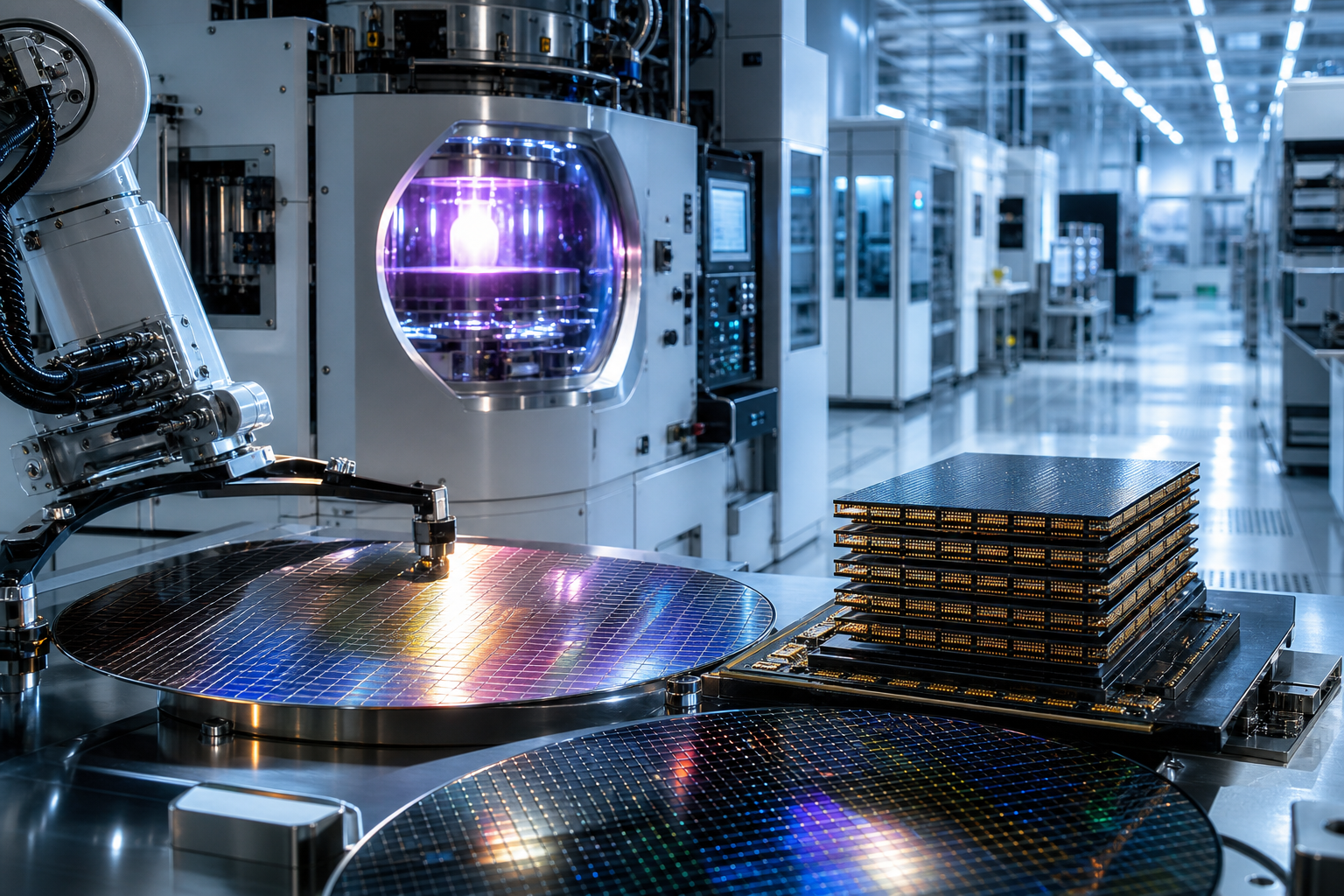
Lam Research is not an AI company in the usual sense. It does not train models, sell cloud subscriptions, or design GPUs. Its role sits deeper in the stack: inside the fabs that make AI memory possible. More AI servers mean more HBM, DRAM, and NAND. Making those chips requires cleaner wafers, more precise etch, and more uniform films.
That is Lam's territory. The company is strongest in etch, deposition, and clean. Those words sound technical because they are. They are also where yield, cost, and production stability are won or lost.
The recent numbers are strong. In the March 2026 quarter, revenue was $5.84 billion, GAAP gross margin was 49.8%, and GAAP operating margin was 35.0%. For a semiconductor equipment company, that kind of margin says customers are not buying generic machinery. They are paying for yield, stability, and process experience that has already been proven in production.
The market already understands much of the story. In LibertyCorpora's market snapshot on May 5, 2026 at 14:24:39 UTC, LRCX traded at $269.54, with a market value of roughly $338.1 billion. The stock already carries a large amount of belief in AI memory, 3D chip complexity, and durable service revenue.
The cleaner conclusion is this: Lam's advantage is real, but it is not an ASML-style monopoly. Lam is not built around one irreplaceable tool. Its moat comes from process learning, installed tools inside customer fabs, service relationships, and the cost of switching away from a qualified setup. The durability of that moat is the real issue.
What Lam gets paid for
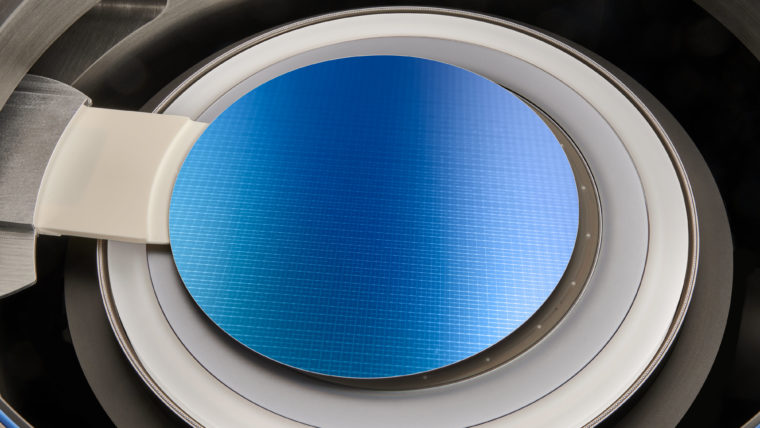
At a simple level, semiconductor manufacturing is a repeated loop: add a film, remove the right material, clean the wafer, and repeat. After hundreds of carefully controlled steps, a wafer becomes usable chips.
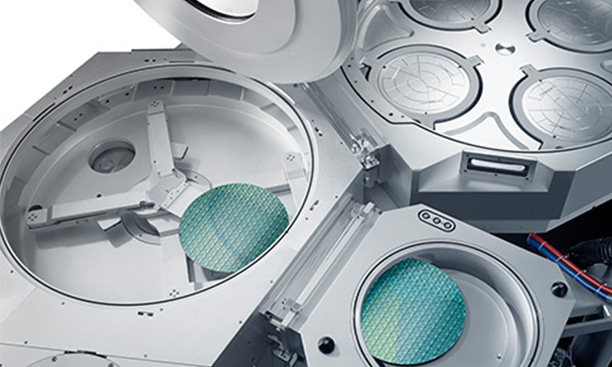
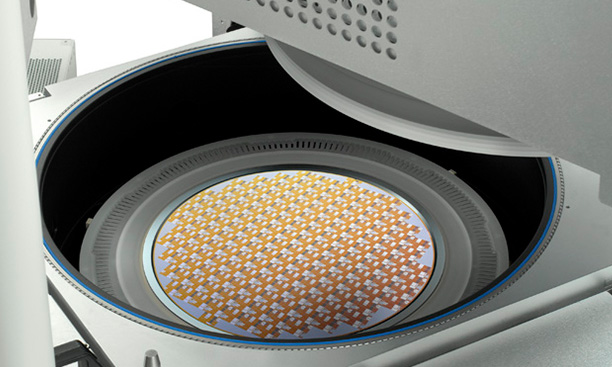
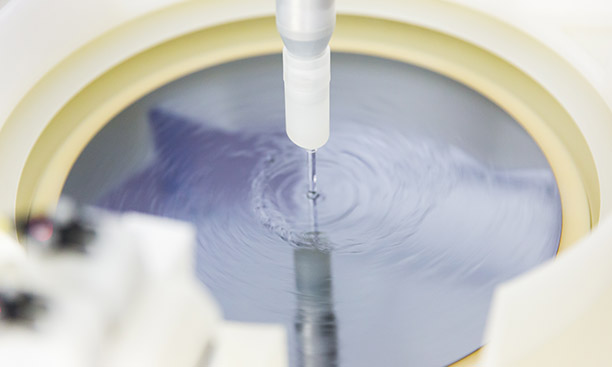
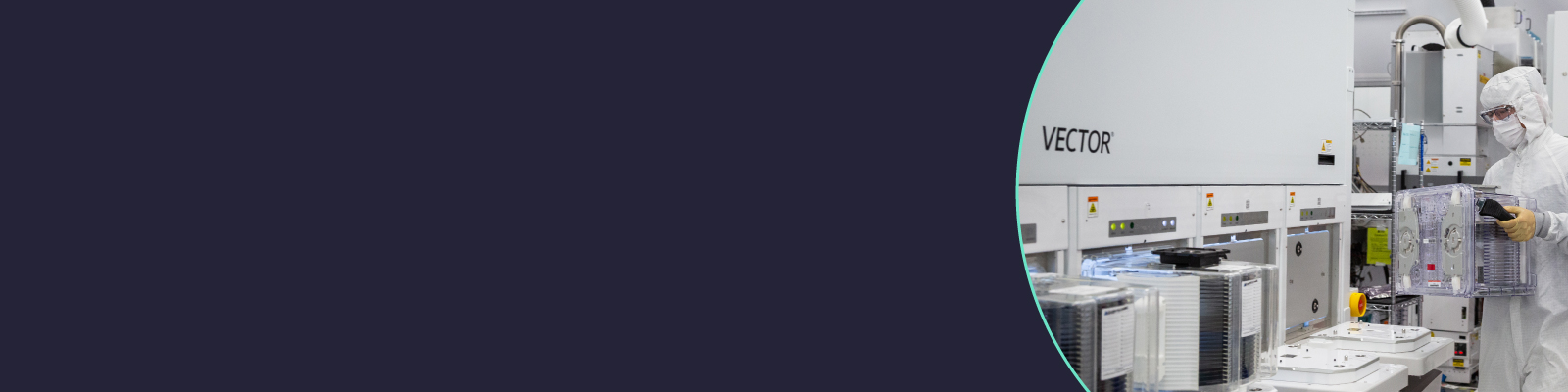
Deposition adds thin films to the wafer. Those films must be extremely uniform because later steps depend on them. Etch removes material with precision. It is not scraping a surface. It uses plasma and chemistry to remove the right material in the right location. Clean removes particles and residues that can ruin yield.
This is why Lam is more than a box maker. It sells equipment, but the deeper product is production reliability. Customers do not choose Lam because a tool looks impressive on a product page. They choose it because a specific process can run with acceptable yield, uptime, defect control, and cost.
Lam's revenue also reflects that structure. Systems revenue comes from selling new tools. Customer support-related revenue and other comes from the installed base: spares, service, upgrades, productivity improvements, and mature-node tools. In fiscal 2025, systems revenue was $11.49 billion and customer support-related revenue and other was $6.94 billion, or about 38% of total revenue.
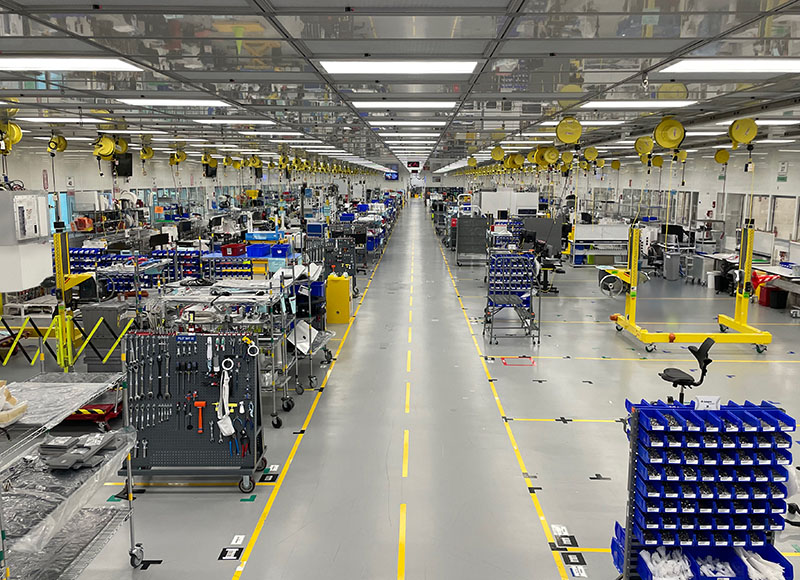
That installed-base line is important. Lam does not sell a tool and vanish. Once the tool is inside a fab, Lam keeps touching the production process through service, parts, upgrades, and recipe work. That relationship can matter when the next process decision arrives.
AI memory makes the process harder
Lam is easier to understand through 3D structures than through the word AI. Older chip progress was largely about drawing smaller features on a flatter surface. Increasingly, progress also means building upward. 3D NAND stacks more layers. HBM stacks DRAM chips and connects them close to the GPU so data can move faster.
The more vertical the structure becomes, the harder manufacturing gets. In 3D NAND, manufacturers must etch deep, narrow channels through many layers. If the channel bends, roughens, or varies too much across the wafer, yield suffers. HBM also brings packaging, heat, interconnect, and customer qualification challenges.
This is where Lam's high-aspect-ratio etch matters. Deep, narrow structures are difficult to make repeatedly. Etch is also linked to deposition and clean. The film that was deposited affects the later etch step. The residues left after etch affect yield. Lam's value comes from neighboring process capabilities that become more important as chips become more three-dimensional.
So the AI link is practical, not decorative. Lam does not make the AI model. Lam helps make the memory and chips that the model economy consumes. When AI chips get more complex, the manufacturing process becomes more valuable.
The moat is not monopoly. It is familiarity inside the fab
Calling Lam a good technology company is true, but too vague. In semiconductor equipment, the practical question is more specific: has this tool already been qualified inside the customer's exact process?
Changing a tool is not light work. A customer may need to retune recipes, stabilize yield, retrain engineers, and rebuild spare-parts routines. A cheaper tool can become expensive quickly if it disrupts production.
Lam's first advantage is high-aspect-ratio etch. Making deep, narrow structures repeatably requires plasma control, chemistry, temperature stability, chamber design, and customer-specific recipes. Capital matters, but process learning and time matter just as much.
The second advantage is the installed base. The more Lam tools are already in the fab, the more service, spares, upgrades, and process adjustments tend to revolve around Lam. Customers have good reasons to stay with a qualified setup, especially when production stability matters more than headline equipment price.
The third advantage is switching cost. Lam's FY2025 Form 10-K says customers evaluate equipment suppliers on process performance, productivity, defect control, service support, and total cost of ownership. That is the right checklist. Price matters, but not enough to justify unnecessary yield risk.
Still, the moat should not be overstated. Lam is not ASML with EUV. Applied Materials, Tokyo Electron, ASM, SCREEN, SEMES, and Chinese local suppliers all matter. Customers combine different suppliers across process steps.
Lam's moat is therefore less like a giant wall and more like a deeply fixed anchor inside the fab. It is not always visible from the outside, but it can be hard to remove. Lam wins when customers have already tuned the process around its tools and would rather improve the known setup than start over.
- LibertyCorpora interpretationLam's edge is less the AI label than process experience inside customer fabs and the difficulty of switching proven tools.
The numbers are strong. The expectations are not cheap
Lam's March 2026 quarter revenue was $5.84 billion, up from $4.72 billion a year earlier. The mix was useful: $3.73 billion from systems and $2.11 billion from customer support-related revenue and other. New tools and installed-base activity moved together.
GAAP gross margin was 49.8%. That is strong for a semiconductor equipment company. It suggests customers still value Lam's process performance and reliability rather than treating the tool as a commodity.
GAAP operating margin was 35.0%. Lam reached that level while continuing to spend on R&D. Research and development expense was $1.73 billion for the first nine months of FY2026. In this industry, R&D is expense, but it is also the entry fee for the next process generation.
Cash generation was healthy as well. Operating cash flow for the first nine months of FY2026 was $4.40 billion. After capital expenditures and intangible asset purchases, simple nine-month free cash flow was about $3.62 billion, or roughly $4.83 billion annualized.
The price gives the story its tension. Against a market value around $338.1 billion, that annualized simple FCF run rate implies a yield near 1.4%. Lam is not struggling to generate cash. The issue is that the market is already paying for a lot of future durability.
Inventory looks more like movement than blockage
For an equipment company, the shape of inventory matters more than the headline number. At the end of March 2026, Lam had $2.51 billion of raw materials, $388 million of work in process, and $1.11 billion of finished goods.
That inventory shape is constructive for now. Revenue increased while finished goods declined. If demand were weakening sharply, finished goods would usually be the first line to watch. Still, the next few quarters should be checked against receivables, deferred revenue, and customer acceptance timing.
Where the thesis can break
The first risk is China. China represented roughly 34% of FY2025 revenue and 37% of revenue for the first nine months of FY2026. That is a major pillar of reported results. U.S. export controls and Chinese localization policy can affect revenue and margins directly.
The second risk is the memory cycle. Lam is well aligned with 3D NAND, DRAM, and HBM, but memory customers can cut capex sharply in a downcycle. Installed-base support helps, but it cannot remove new-tool cyclicality.
The third risk is competition. Applied Materials has a broader portfolio. Tokyo Electron competes in several process steps. ASM, SCREEN, SEMES, and Chinese local suppliers matter in specific niches. Lam can be strong without being alone.
The final risk is valuation. A good company can still have a demanding price. At this level, Lam needs repeated evidence that its process advantage, service revenue, and margins can outlast the current memory upcycle.
What to watch next
Lam should be followed through numbers first, not through AI slogans. Five items matter most:
- Customer support-related revenue staying near or above $2 billion per quarter
- Gross margin holding near 50%
- DRAM and NAND investment strength lasting beyond one or two quarters
- China revenue exposure becoming less risky, or at least not more concentrated
- Finished-goods inventory not starting to build
If these move together in the right direction, Lam's process advantage is being proven again. If revenue looks fine but finished goods rise, China exposure stays high, and margins compress, the thesis deserves more caution.
Lam does not sell AI directly. It sells part of the manufacturing discipline that AI memory requires. That distinction is the whole point. The next evidence will not be in the excitement around AI itself. It will be in orders, service revenue, margins, inventory, and customer capex.