For Busy Readers
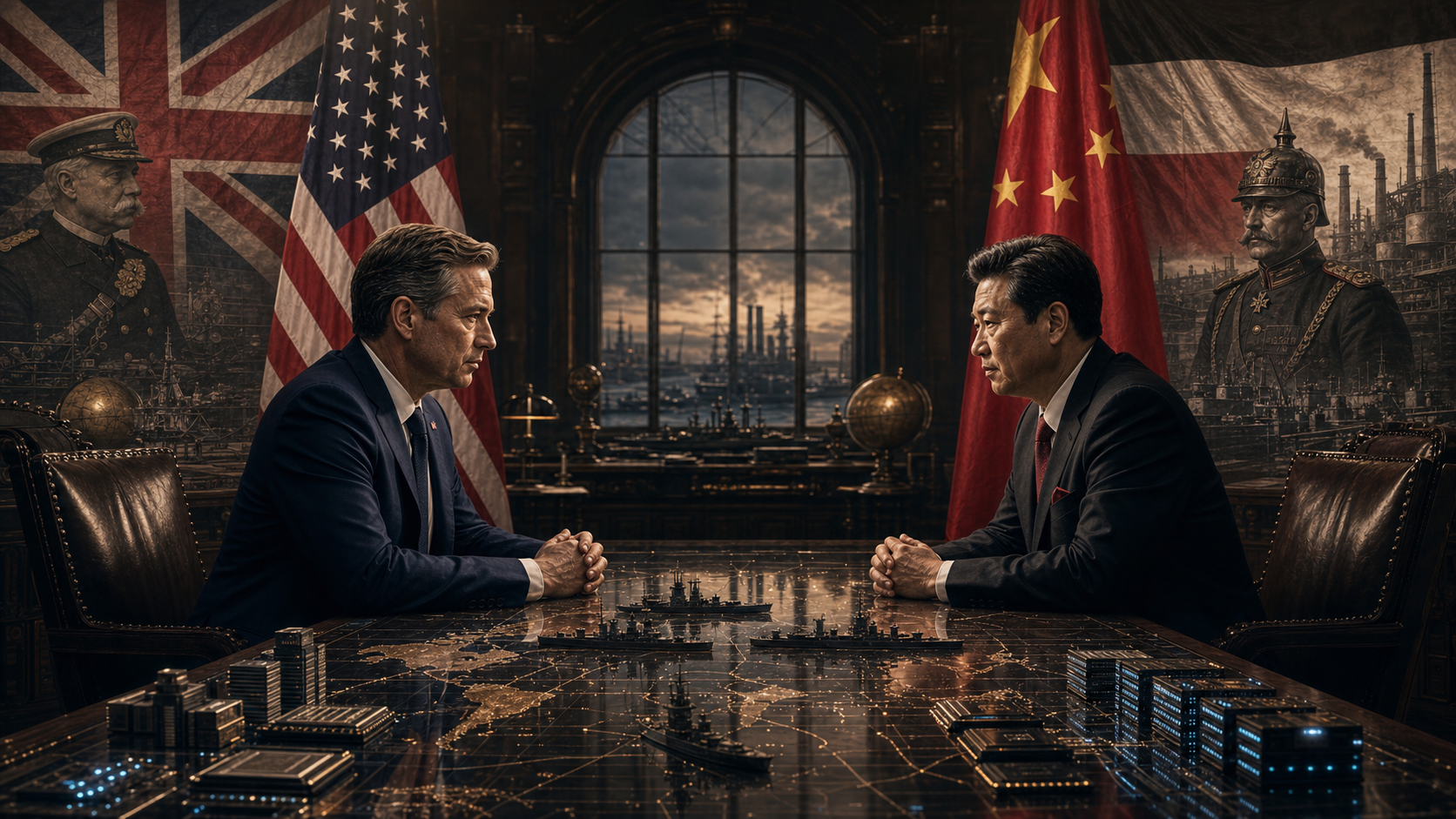
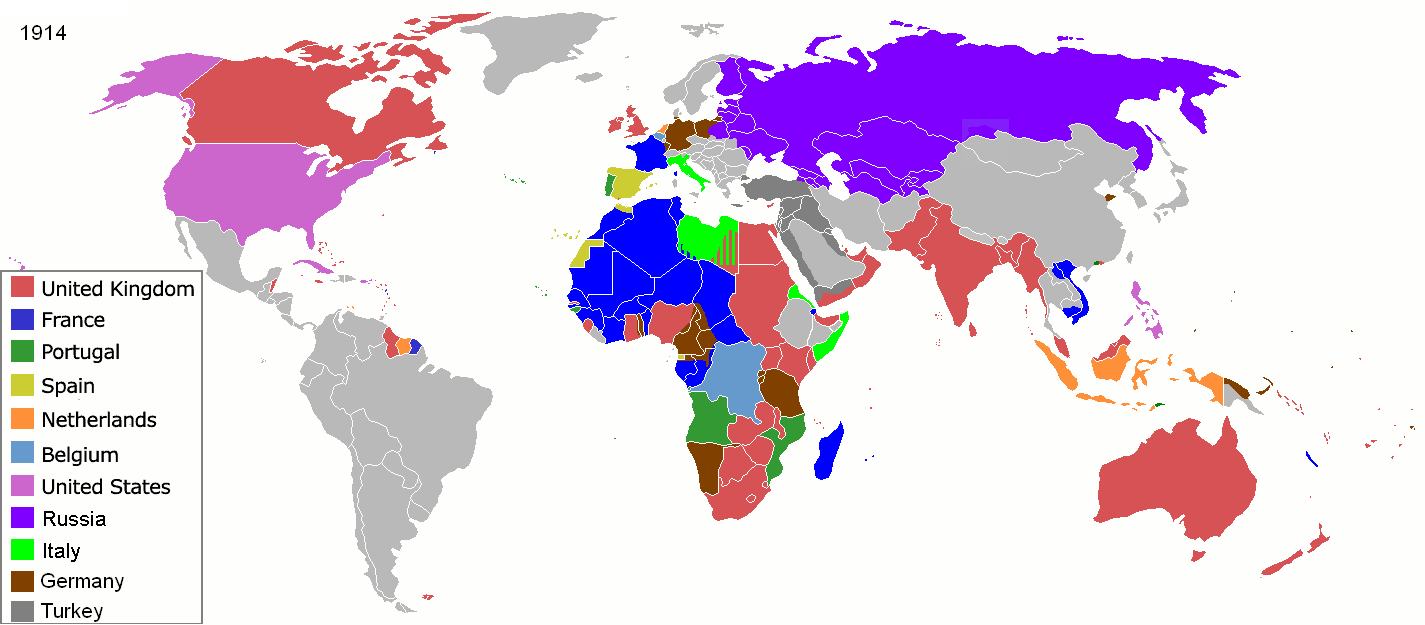
The U.S.-China rivalry is often called a new Cold War. That phrase is not useless. Ideology, military power, technology, and alliances all matter. But if we want a sharper historical lens, the better comparison may be Britain and Germany before 1914, not the United States and the Soviet Union after 1945.
Britain was the incumbent power. It controlled the seas, the financial architecture, imperial trade routes, and much of the operating system of globalization. Germany unified late but industrialized fast. It had steel, chemistry, electrical engineering, universities, and a growing navy. It did not see itself as a supplicant. It saw itself as a great power being denied a fair place in a British-shaped order.
That is what makes the analogy uncomfortable. Britain and Germany were not born enemies. They traded. Their royal families overlapped. For much of the nineteenth century, war between them did not look inevitable. Yet as Germany’s industrial and naval power grew, each side began to read the other through suspicion.
The United States and China have reached a similar interpretive problem. The U.S. still has the dollar, the deepest capital markets, allied naval power, universities, cloud platforms, chip design, entertainment, and a vast innovation system. At the same time, it no longer reads China’s rise as mere development. China’s EVs, batteries, solar panels, ships, drones, rare-earth refining, AI systems, and semiconductor ambitions are treated as strategic facts.
China reads the same story differently. It sees itself as a country that moved from poverty to great-power status, built the world’s largest manufacturing base, and now faces American export controls, investment screening, alliance tightening, and pressure around Taiwan.
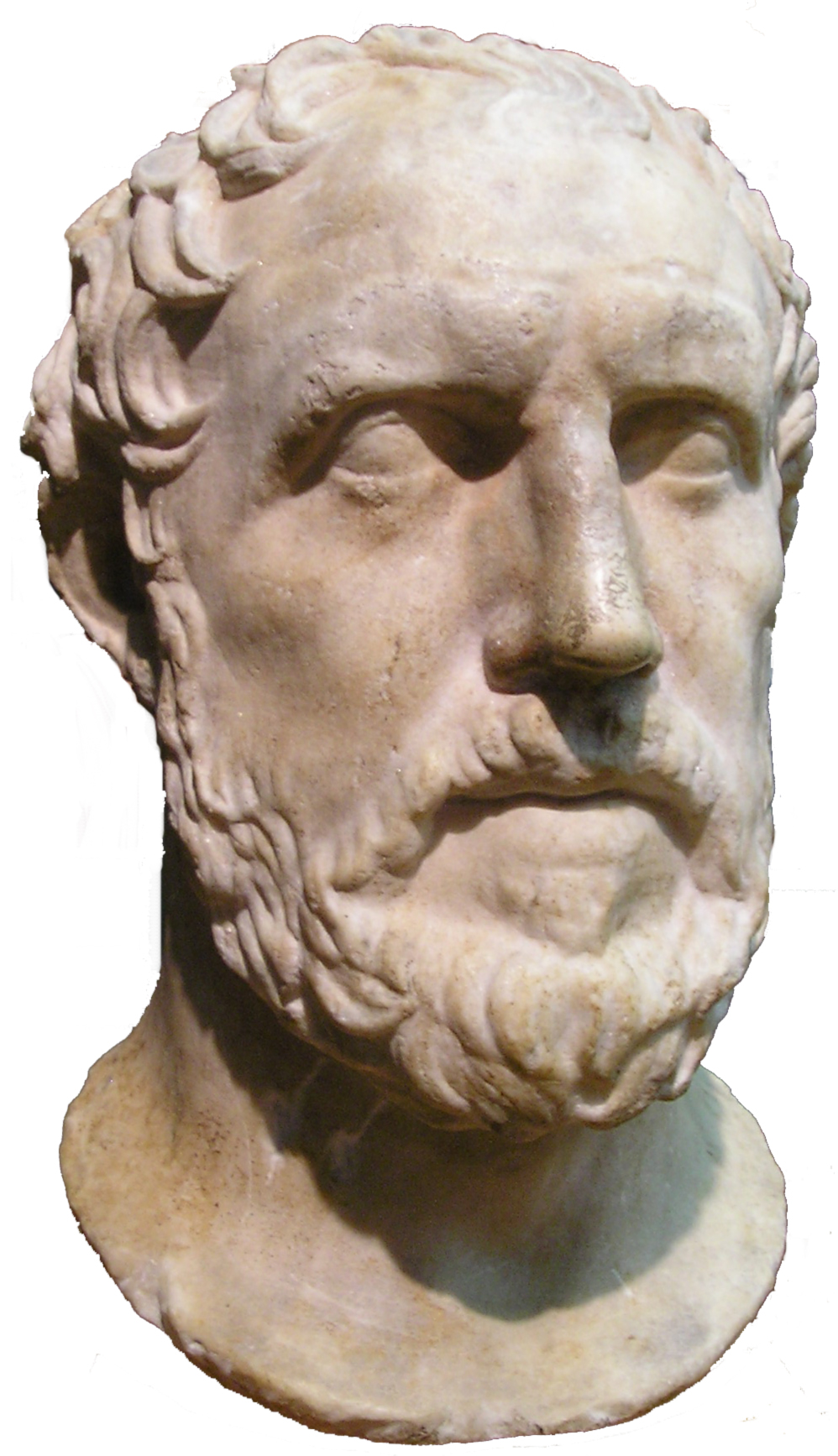
That is the Thucydides Trap. It does not mean war must happen. More precisely, it describes a structure in which the incumbent’s fear and the rising power’s resentment reinforce each other. If that structure persists long enough, small events can become large ones.
Still, the world is not 1914. Nuclear weapons exist. Supply chains are far more complex. The United States is structurally stronger than Edwardian Britain, and China is more deeply embedded in the global economy than imperial Germany ever was. China also faces aging, property-sector stress, debt, and productivity constraints.
So the most plausible future is not immediate total war. It is a long rivalry in which the two powers fight hard, bargain often, and keep meeting because neither can fully walk away.
The cost, however, does not disappear just because the rivalry is managed.
War Is Not Fate
The phrase Thucydides Trap sounds heavy, almost exam-like. Its meaning is simpler: when an established power fears a rising power, the risk of conflict rises.
The key question is not who became angry first. The more important question is how each side begins to interpret the other. A move that one side calls defensive can look like preparation for domination to the other. Over time, interpretation hardens into policy. Policy hardens into military spending, export controls, alliances, and red lines.
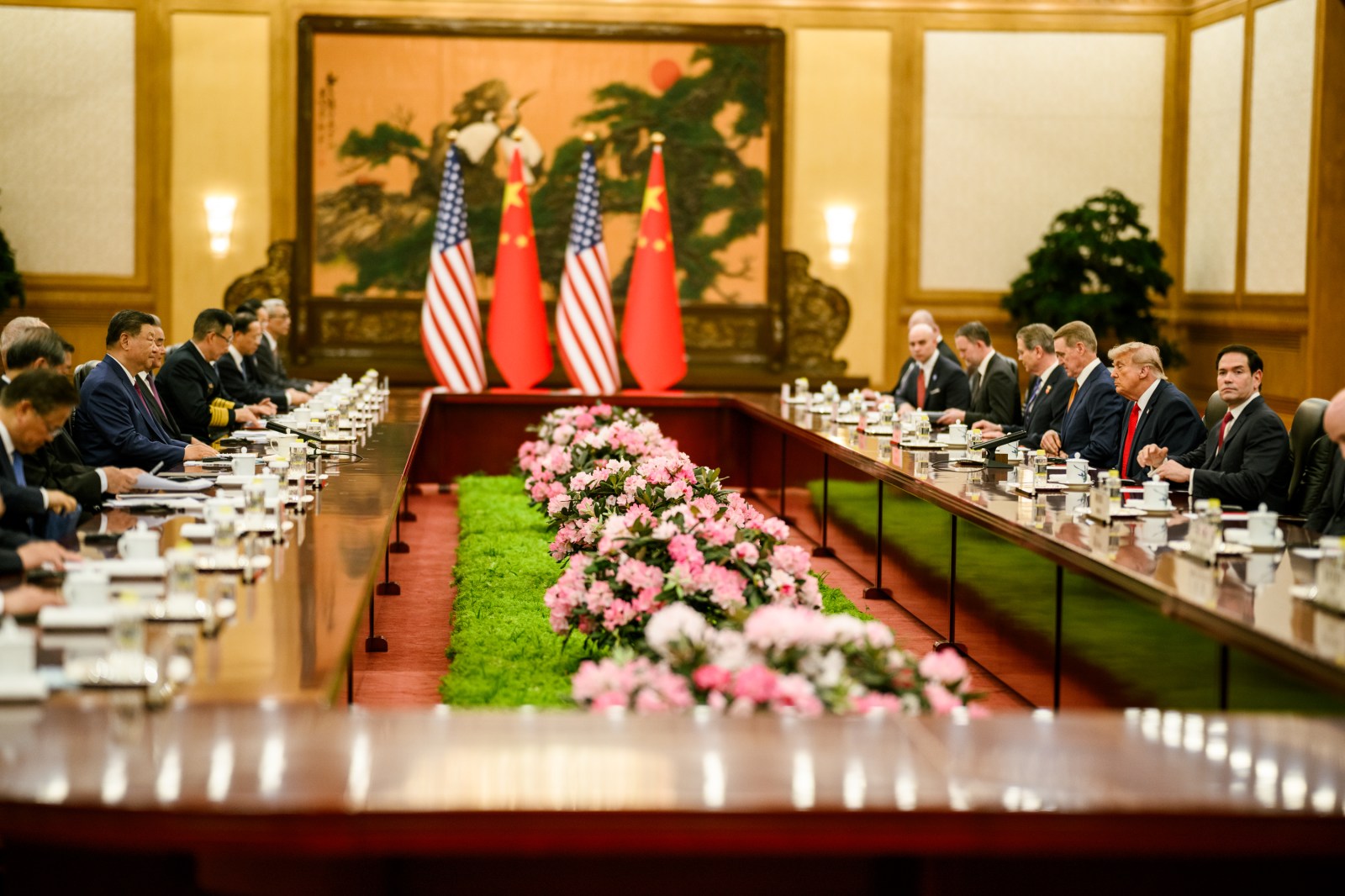
That is why Xi Jinping’s May 14, 2026 meeting with Donald Trump mattered beyond the photo opportunity. In the Chinese foreign ministry readout, Xi asked whether China and the United States could overcome the Thucydides Trap and build a new paradigm of major-country relations. The same readout treated Taiwan as the most important issue in the bilateral relationship.
This is not just a historical reference. It is diplomatic framing. From Beijing’s side, it says: do not turn China’s rise into a reason for containment. From Washington’s side, the same language can sound different: China is asking to be recognized as a co-author of the international order. The danger is not the phrase itself. The danger is that both sides hear a different sentence.

Why 1914 Fits Better Than the Cold War
The Cold War comparison is familiar. But it misses one crucial feature of the U.S.-China rivalry: deep economic entanglement. The U.S. and Soviet economies were not joined at the hip. The U.S. and China were. For decades, American consumers, Chinese factories, dollar finance, global shipping, and technology transfer formed one large operating system.
That is why the Britain-Germany comparison cuts deeper. Britain and Germany also had reasons to stay connected. They traded. They understood each other’s industries. They were not mechanically destined to become enemies. Yet when Germany built a larger navy and pursued Weltpolitik, Britain’s view changed.
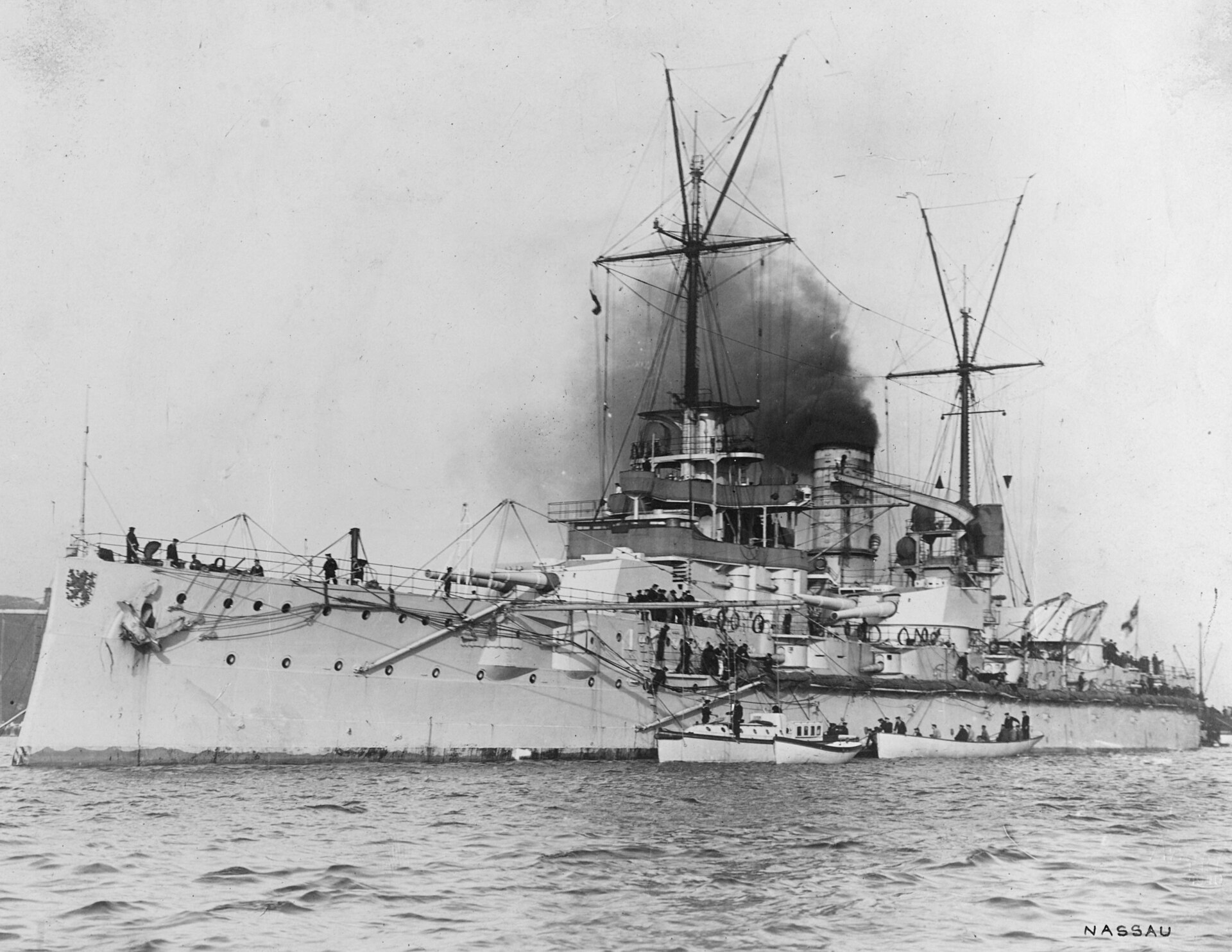
To Britain, Germany’s battle fleet was not just a symbol of national pride. It could threaten the sea lanes that kept the empire alive. To Germany, British naval dominance looked like a rulebook written by someone else after the best seats had already been taken.
The relationship changed from one with reasons to cooperate into one where each side counted the other side’s ships.
America Has Britain’s Anxiety
The United States remains extremely powerful. The dollar, capital markets, aircraft carriers, alliances, universities, cloud platforms, chip design, biotech, aerospace, media, and immigration all reinforce one another. American power is not just a military inventory. It is a network.
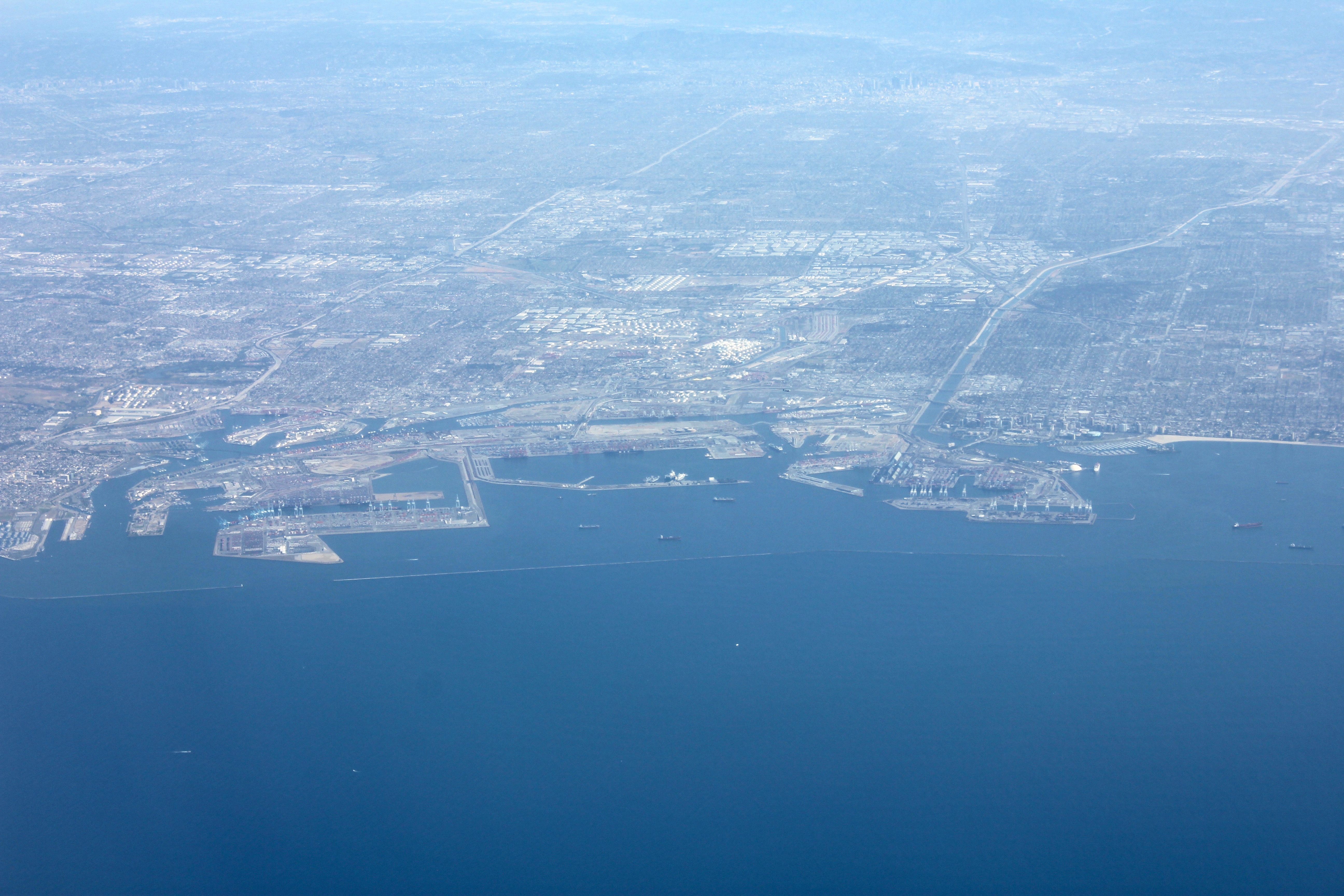
But powerful countries can still feel insecure. In fact, they often know more clearly what they might lose. Britain did not look at German shipyards as neutral industrial facilities. The U.S. increasingly does not look at Chinese fabs, ports, AI data centers, or battery plants as ordinary commercial assets.
Industry becomes technology. Technology becomes military capacity. Military capacity changes regional order.
That is the American anxiety. China no longer makes only cheap goods. It competes in EVs, batteries, solar, shipbuilding, telecom equipment, rare-earth processing, drones, AI, and semiconductors. In Washington, those sectors do not stay neatly inside the economics drawer. They spill into strategy.
There is also domestic fatigue: deficits, polarization, manufacturing anxieties, and debates over alliance costs. But fatigue is not collapse. The United States is still central, and precisely because it is central, it can become more sensitive about relative decline.
China Shares Germany’s Grievance
China shares a version of Germany’s grievance: the feeling of arriving late, growing fast, and being told that the rules were already written.
From Beijing’s perspective, China moved from poverty to great-power status, lifted hundreds of millions of people, built the world’s manufacturing base, and is now competing in advanced technology. Yet the U.S. blocks advanced chip access, tightens semiconductor equipment controls, scrutinizes Chinese investment, strengthens ties with Japan, the Philippines, and Australia, and treats Taiwan as a central security issue.
China can read this not as management but as containment.
The United States sees it differently. It argues that China is not simply getting richer; it is trying to reshape the South China Sea, the Taiwan Strait, technology standards, military balances, and supply-chain leverage. The hard part is that neither side is speaking pure nonsense. China has risen. The United States has reasons to see that rise as strategic. China is being constrained. The United States has reasons to worry about what Chinese power could do.
That is where the trap begins to work.
Interdependence Can Become Fear
People often say the U.S. and China are too entangled to fight. That is true. It is also incomplete.
Interdependence helps peace because both sides suffer when the system breaks. But dependence can become anxiety. The question changes from “How do we benefit from trade?” to “What happens if they turn it off?” Once that happens, trade begins to feel less like a bridge and more like a leash.
Britain and Germany traded before 1914. Yet once German industrial strength looked convertible into naval power, economic connection stopped feeling reassuring. The U.S. and China are living through a similar shift. They need each other, fear each other, and are trying to reduce risk without creating even more risk.
AI Is the Twenty-First-Century Naval Race
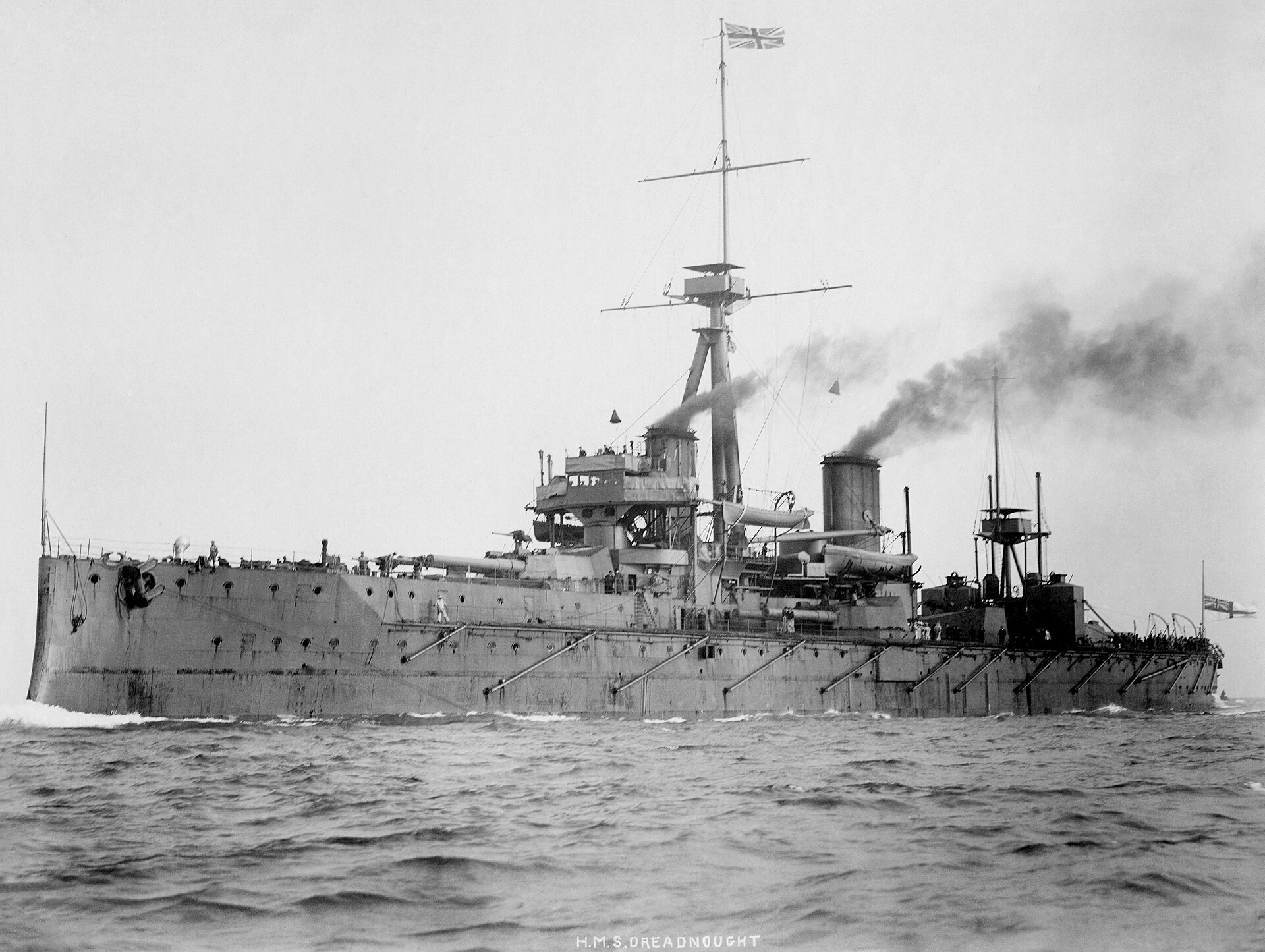
The symbolic object of the Anglo-German rivalry was the dreadnought. It was not merely a ship. It was a technological event that made older battleships look obsolete and changed the standard of competition.
Today, AI is starting to occupy that role. For a state, AI is not only a chatbot interface. It touches productivity, military planning, intelligence, cyber operations, surveillance, autonomous systems, drug discovery, design automation, finance, education, and administration.
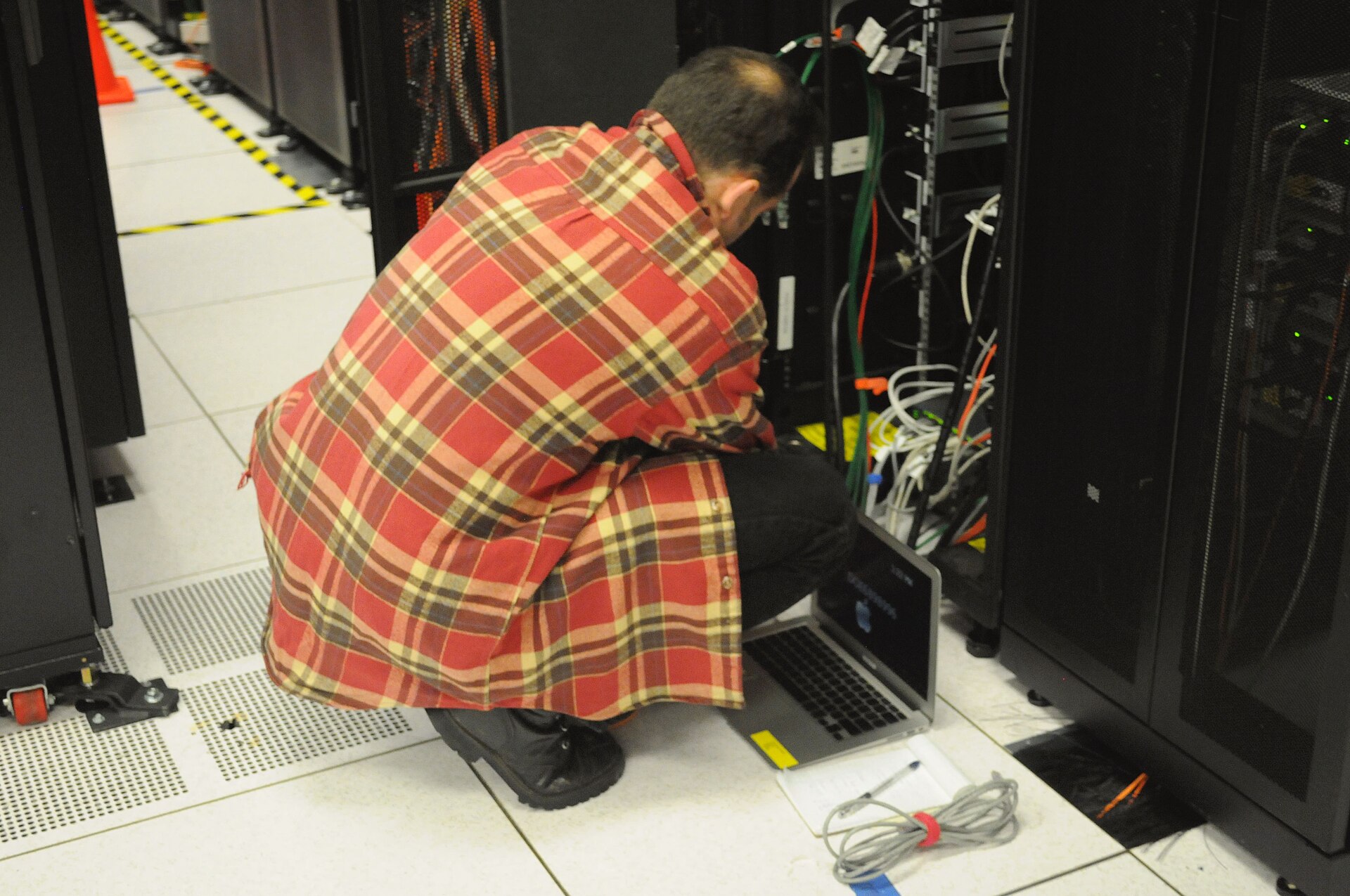
The new race is measured in GPUs, data-center power, access to advanced chips, model performance, cloud capacity, cooling, talent, and energy infrastructure. The bottleneck is no longer only the shipyard. It is also the fab, the grid, the transformer, and the model-training cluster.
This is why U.S. semiconductor export controls matter. The October 2022 BIS rules on advanced computing and semiconductor manufacturing showed that AI chips and supercomputing are treated not merely as commercial goods but as strategic foundations.
The paradox is familiar. The U.S. tries to slow China’s access to the AI stack. China treats that pressure as proof that self-reliance is urgent. A policy designed to restrain a rival can also strengthen the rival’s determination.

Alliances Are Seatbelts and Shackles
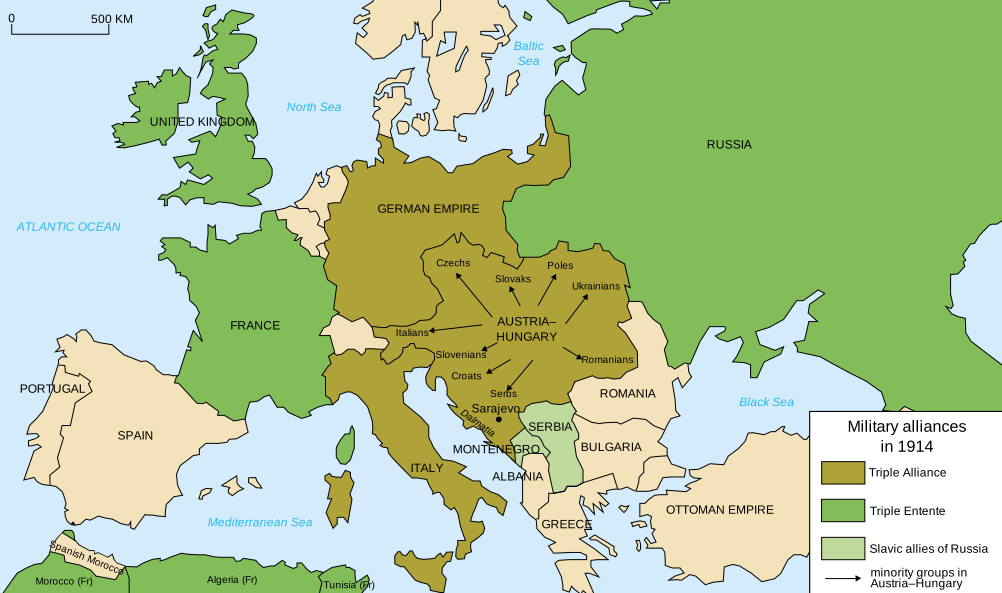
Alliances helped make pre-1914 Europe dangerous. They were designed as safety devices: stand together, deter aggression, avoid isolation. But when a crisis arrives, alliances can narrow choices. Abandoning a friend damages credibility. Defending a friend can pull everyone into a larger fight.
East Asia also has a thickening map of commitments. The U.S. has strengthened security cooperation with Japan, the Philippines, Australia, and other partners. Japan’s foreign ministry summary of the 2024 Japan-U.S.-Philippines summit explicitly opposed unilateral attempts to change the status quo by force in the South China Sea and East China Sea.
China reads these moves as encirclement. The United States reads Chinese military activity and maritime pressure as a challenge to the existing order. Both sides call their own behavior defensive. That is exactly why the situation is dangerous.
The most dangerous rivalry is not always one where a side says, “I intend to attack.” Sometimes it is the rivalry where both sides sincerely say, “I am only defending myself.”
But This Is Not 1914
We should slow down here. Saying the U.S.-China rivalry resembles Britain and Germany does not mean the ending must be the same. History rhymes, but it does not photocopy itself.
First, nuclear weapons exist. Leaders in 1914 badly underestimated the cost of war. American and Chinese leaders know that total war can climb to catastrophic levels.
Second, supply chains are much more complex. A semiconductor supply chain can involve U.S. design, Dutch equipment, Japanese materials, Taiwanese manufacturing, Korean memory, Southeast Asian packaging, and Chinese assembly. Cutting the circuit hurts the other side, but it can also cut your own hand.
Third, the United States is structurally stronger than Britain was in 1914. Britain was an island empire managing a vast overseas system. The U.S. has a continental domestic market, energy, food, the dollar, capital markets, technology firms, universities, and immigration.
Fourth, China is more constrained than imperial Germany. The IMF’s 2025 Article IV consultation pointed to a declining labor force, slower productivity growth, property-sector adjustment, and high debt as medium-term challenges. China’s great-power push is therefore also a race against its internal clock.
The point is not to drag 2026 mechanically into 1914. The point is to notice the shadow without mistaking it for the whole map.
The Bill Comes Due
The next phase of U.S.-China competition will probably be clearer in export controls, investment screening, data rules, subsidies, origin requirements, and supply-chain relocation than in tariffs alone. If the early twentieth century counted battleships, the twenty-first counts chips, AI models, grids, satellites, cables, and data centers.
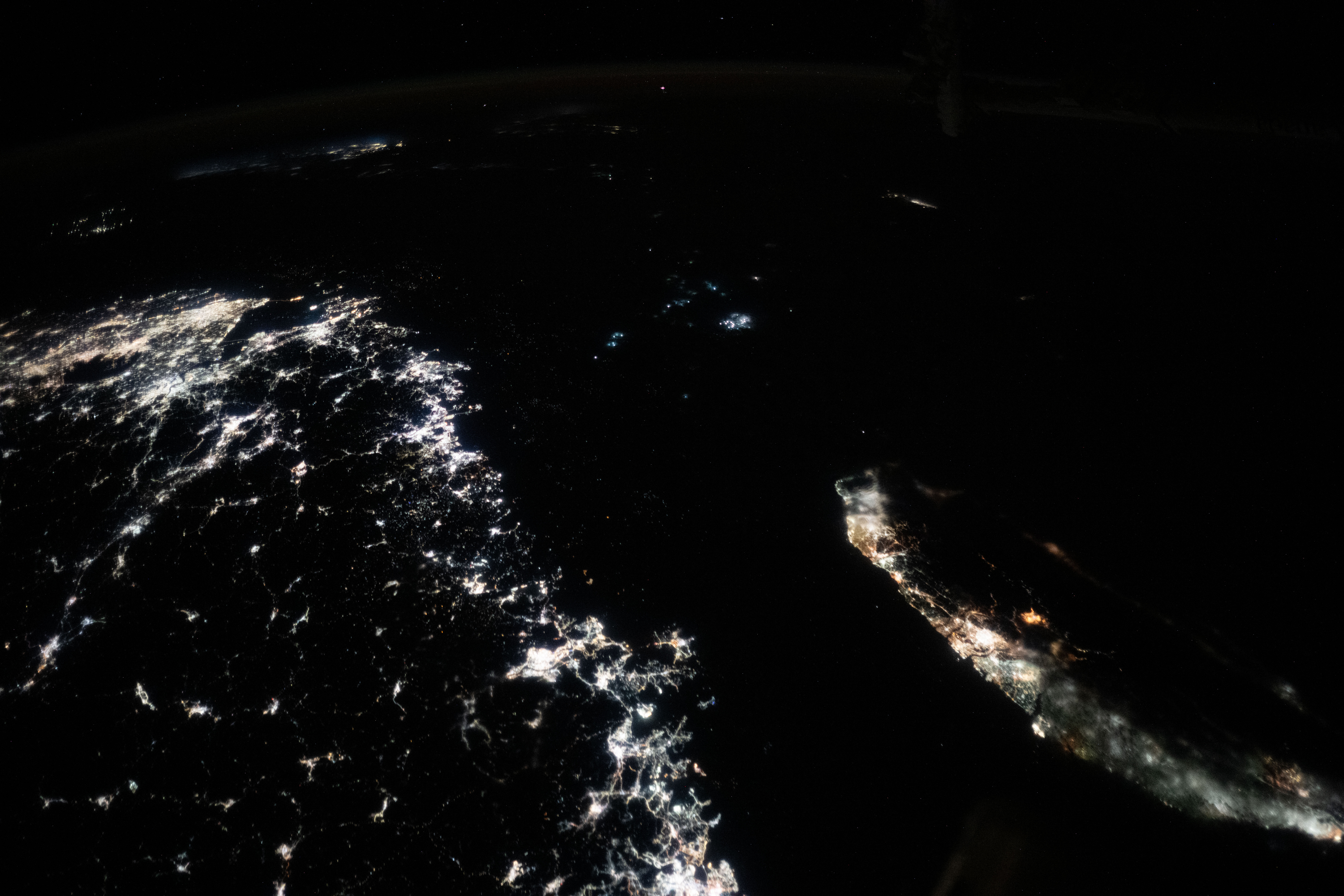
The most dangerous point is the Taiwan Strait. For China, Taiwan is tied to sovereignty and regime legitimacy. For the U.S., it is tied to alliance credibility and the Indo-Pacific order. For the global economy, it is tied to the semiconductor heartland. That combination makes even a small incident hard to contain.
Still, both countries know the cost of a major war. The near future may therefore look like this: harsher rhetoric, more frequent naval encounters, more supply-chain hedging, sharper official statements, and continued summitry. They will not like each other. They will also not be able to fully leave each other.
That is the twenty-first-century Thucydides Trap: not necessarily a trap that detonates into war tomorrow, but one that makes every decision more expensive. Trade gets more expensive. Technology gets more expensive. Alliances get more expensive. Neutrality gets more expensive.



.jpg)
.jpg)
Why 1914 Still Matters
To say that the United States and China resemble Britain and Germany before 1914 is not to say war is coming. It is almost the opposite. We look at the resemblance so that the ending does not have to rhyme.
The tragedy of 1914 did not happen because every leader was irrational. Many believed they were acting reasonably: defending allies, preserving credibility, maintaining deterrence, refusing to reward provocation. Each sentence made sense in isolation. Together, they created disaster.
The U.S. and China also have reasonable sentences. The U.S. says it is defending order. China says it is demanding legitimate rise. The U.S. says free and open Indo-Pacific. China says sovereignty and development rights. Each side’s sentence is not pure fiction.
The most dangerous moment in international politics is not always when one side goes mad. It is when both sides can make partly valid arguments while pushing each other toward worse choices.
History does not return wearing the same clothes. This time it wears semiconductor fabs, AI data centers, undersea cables, dollar payment rails, the Taiwan Strait, the South China Sea, battery minerals, and satellite orbits.
And as usual, the bill eventually reaches people sitting outside the map.